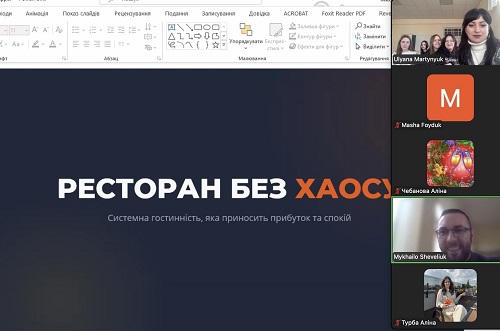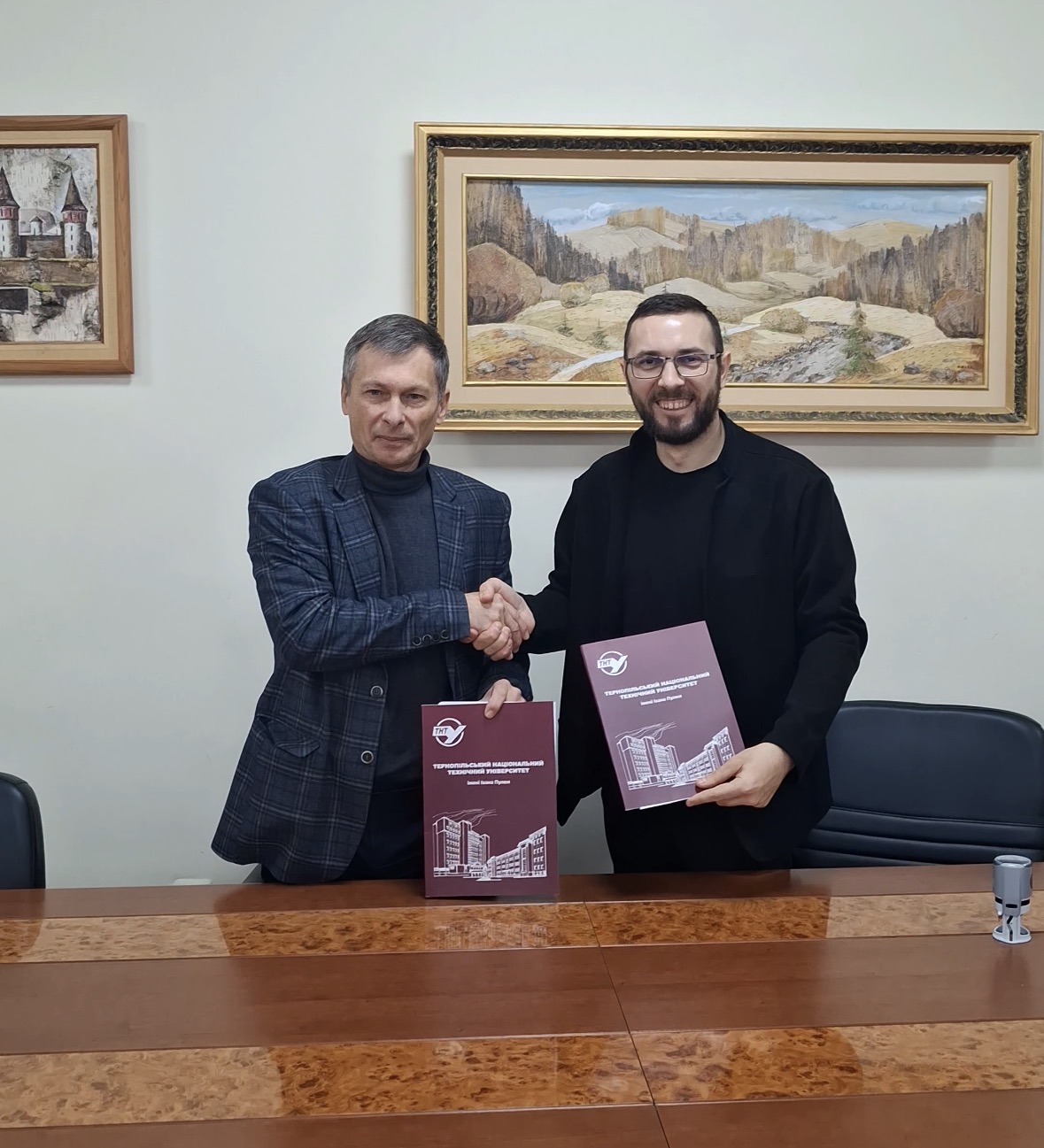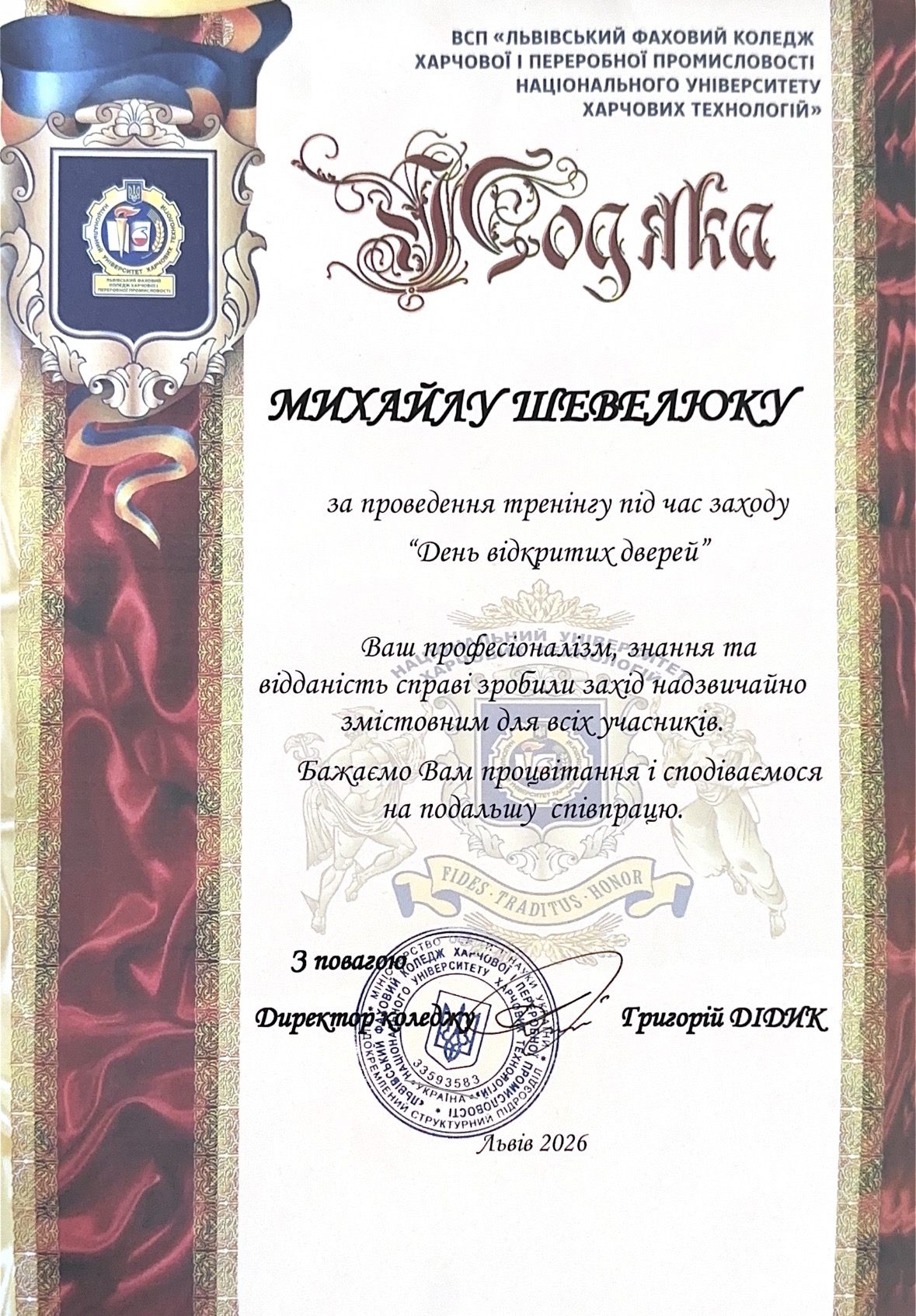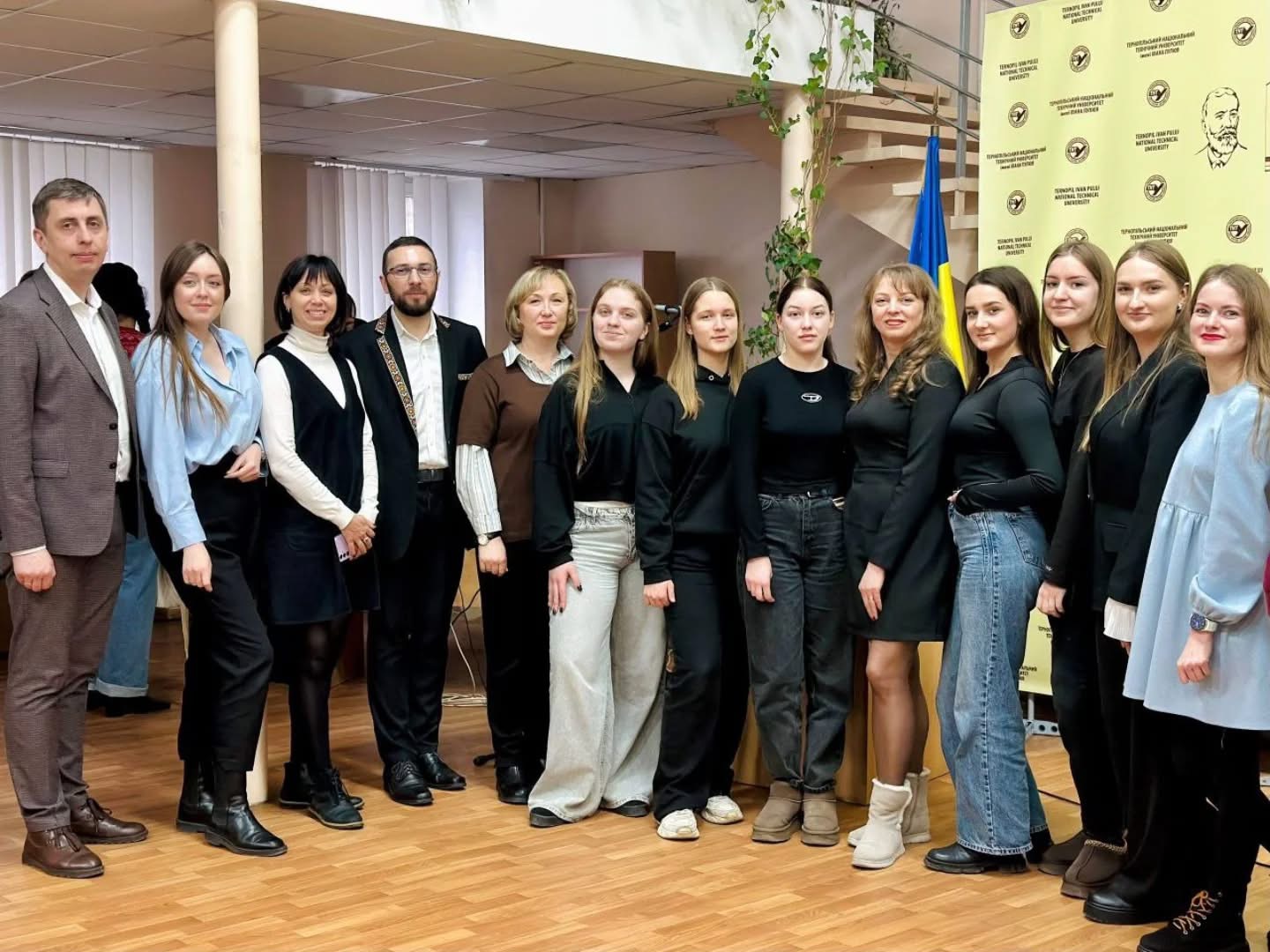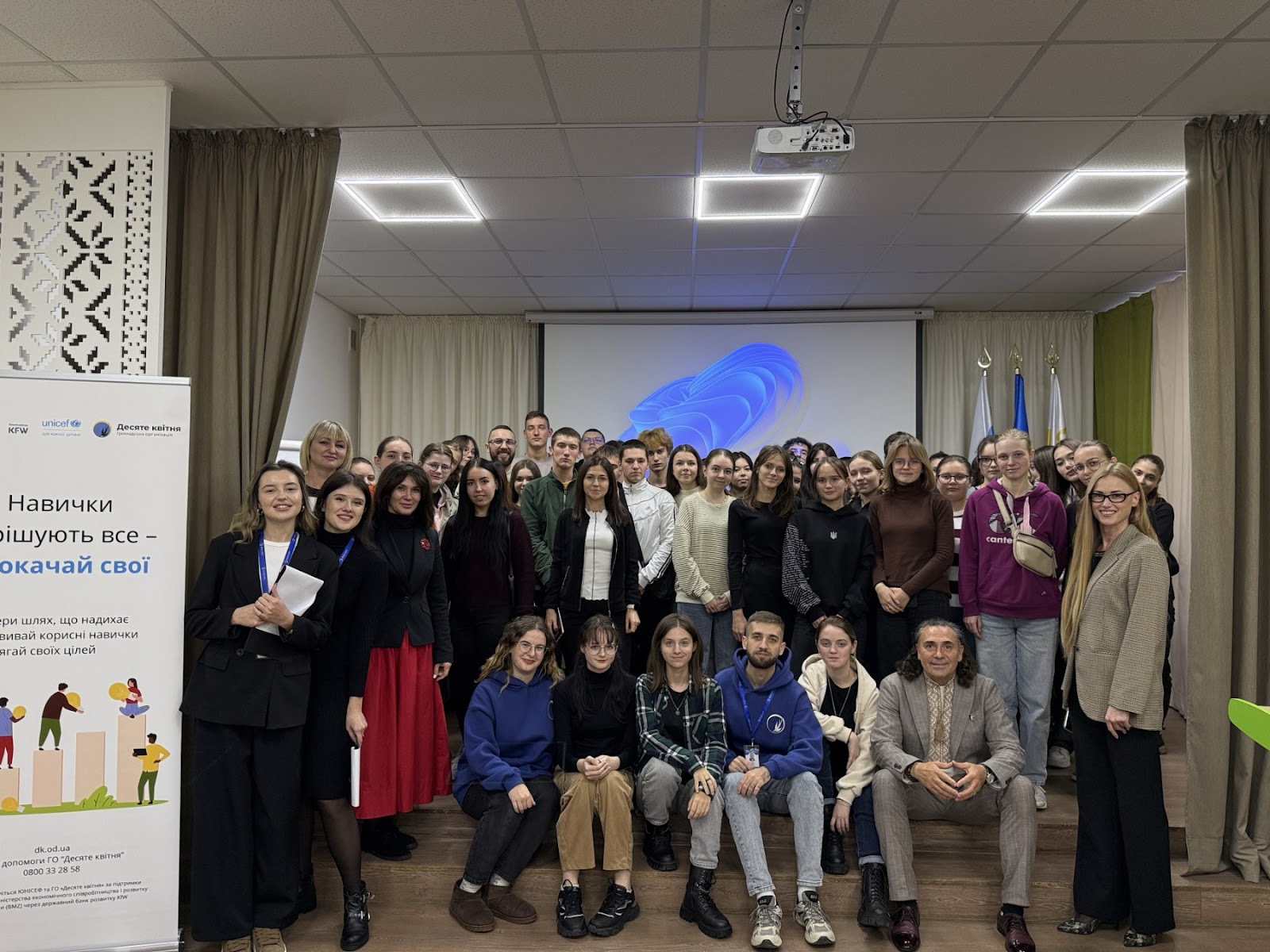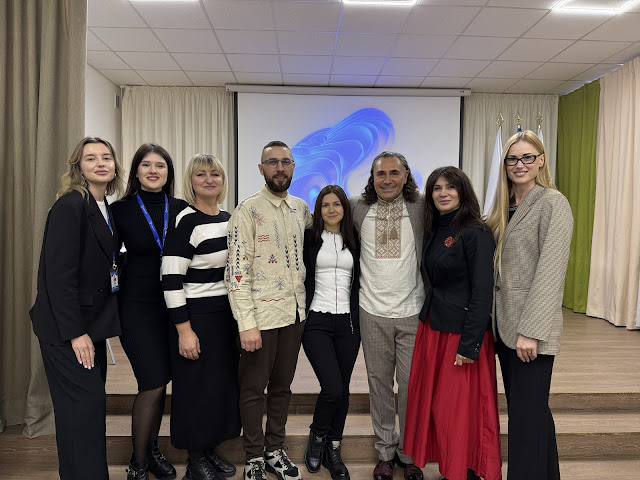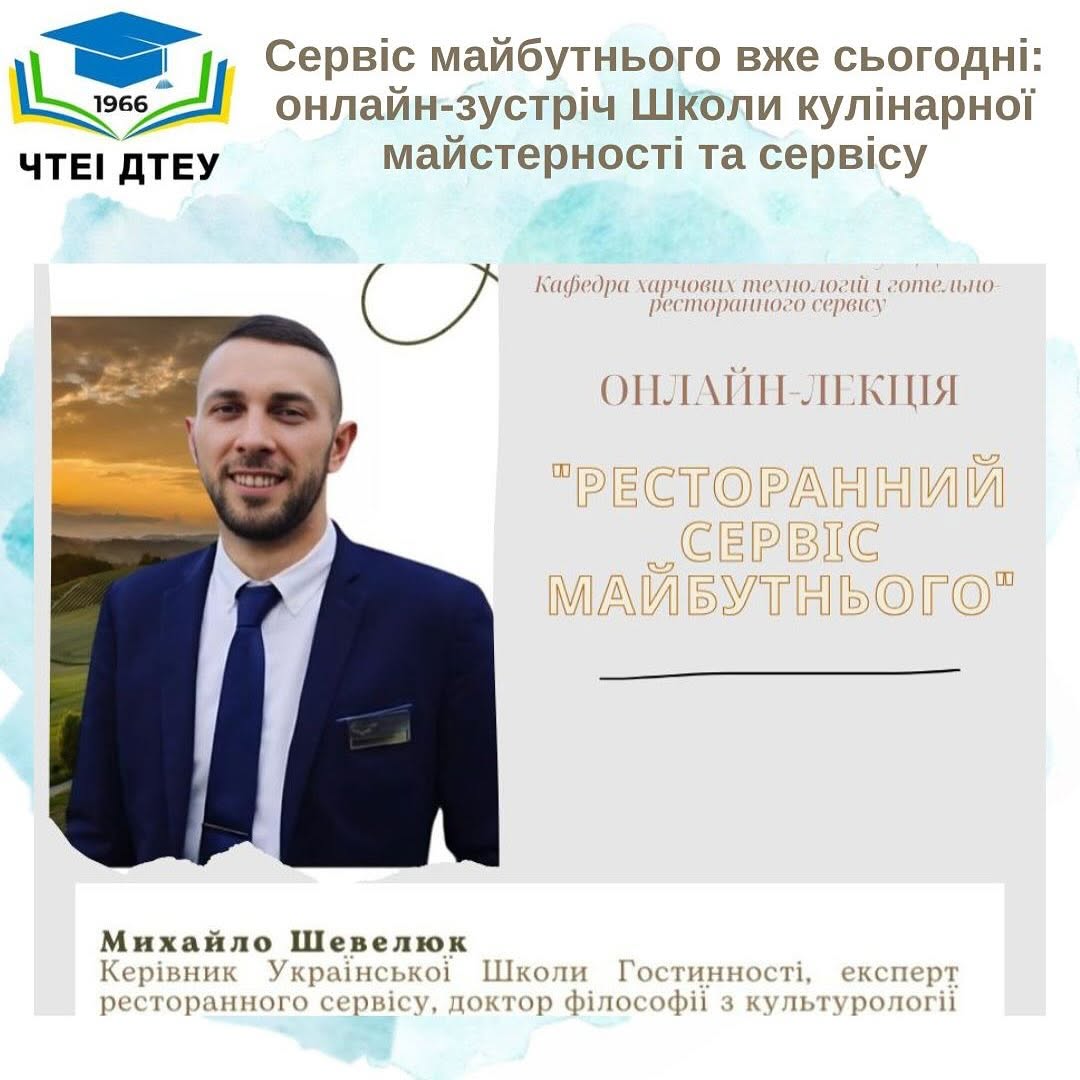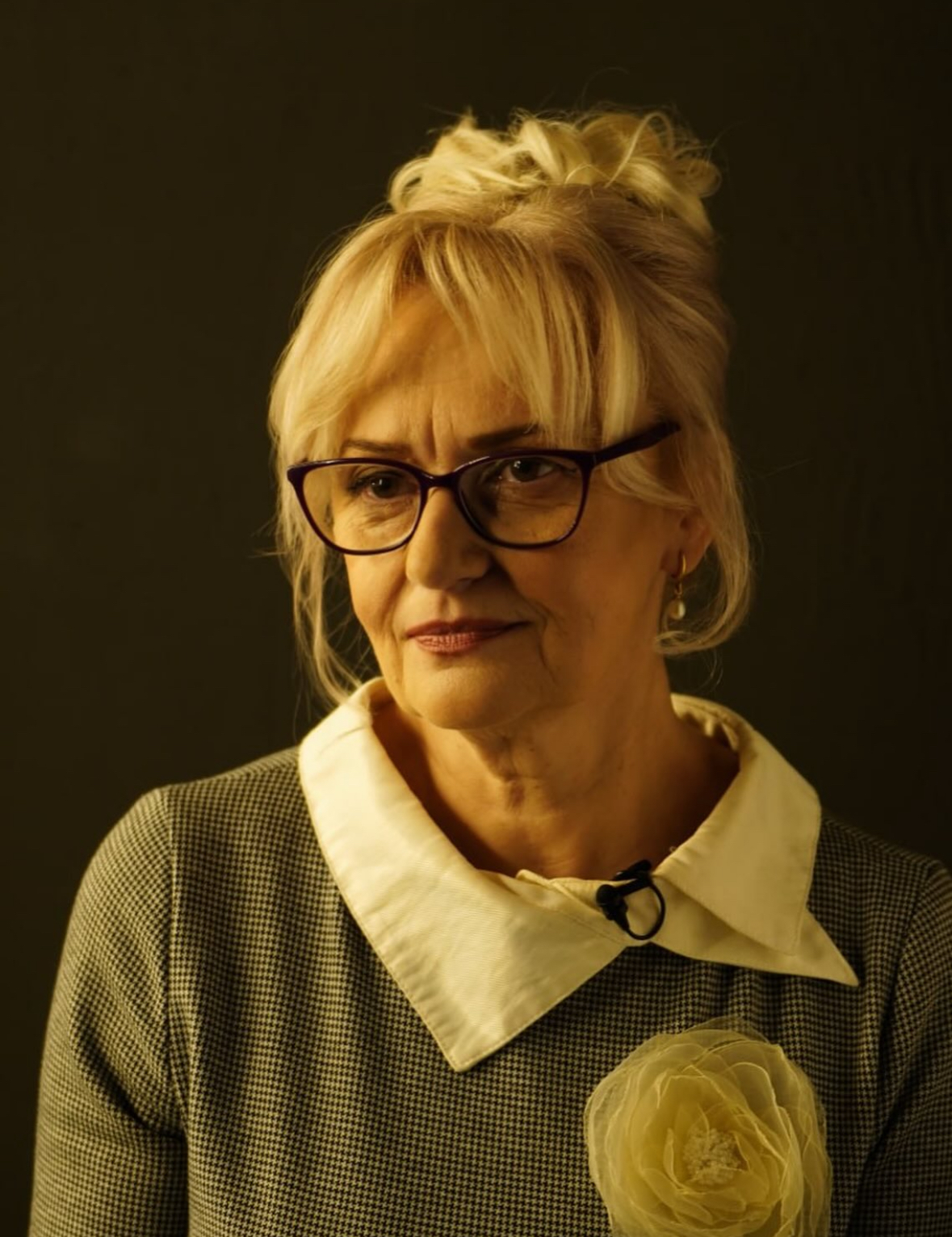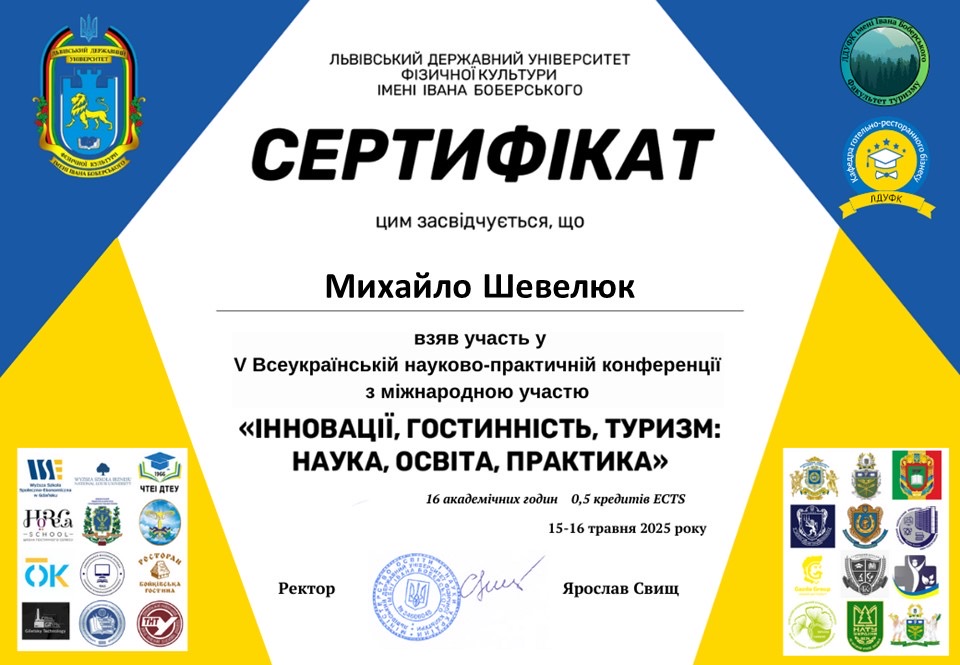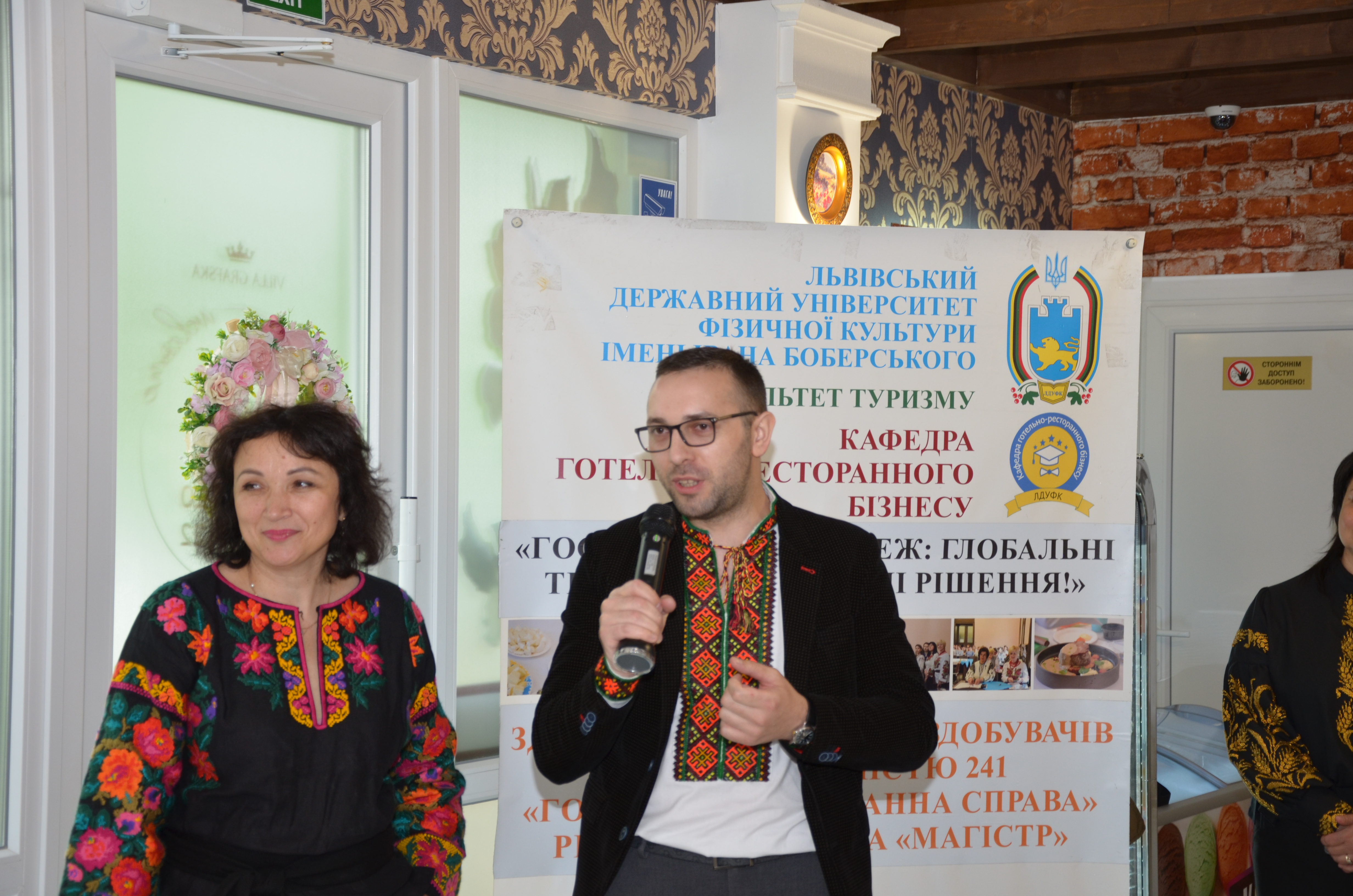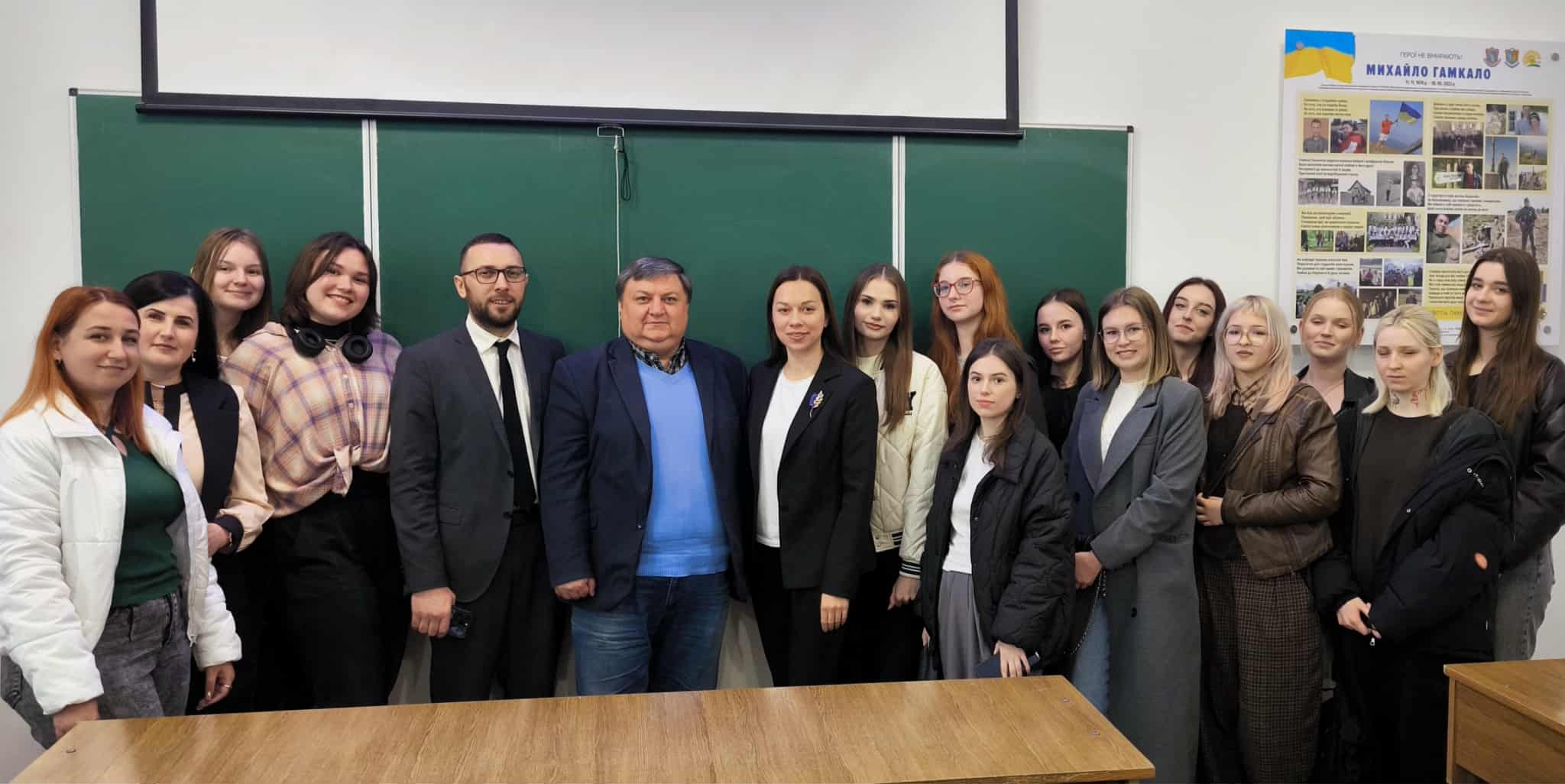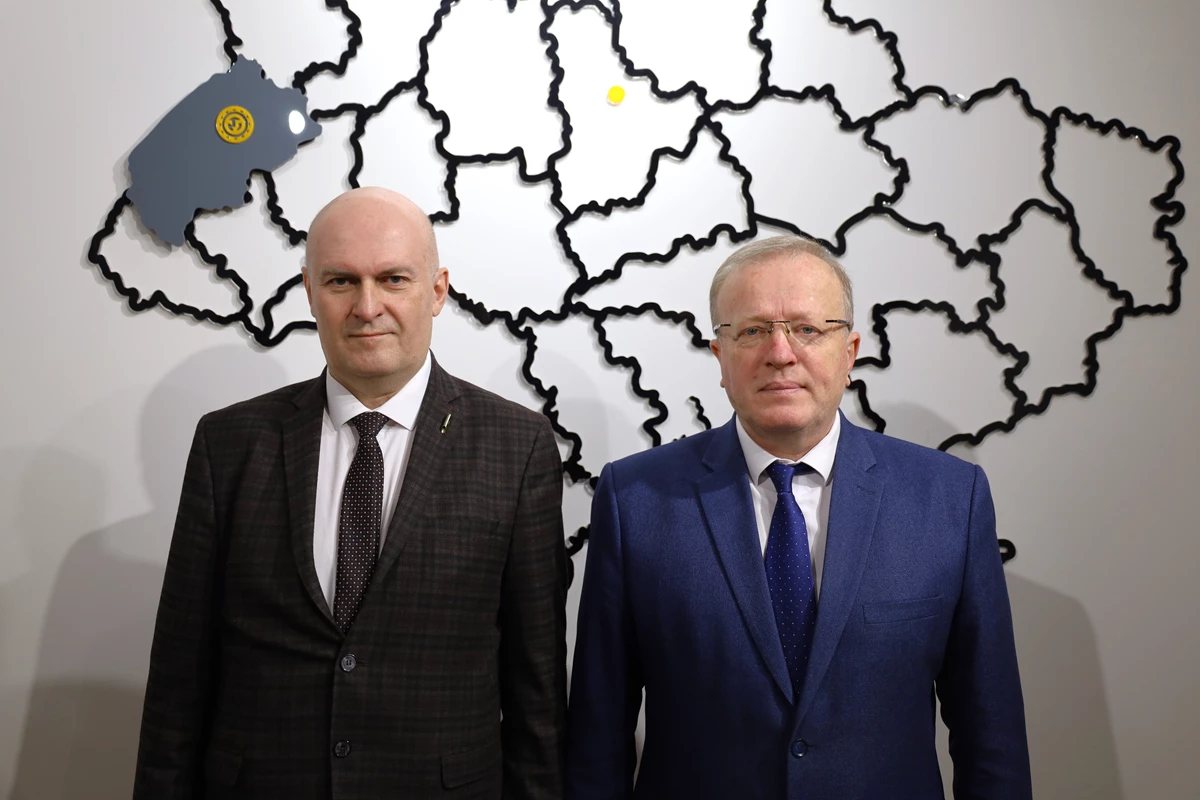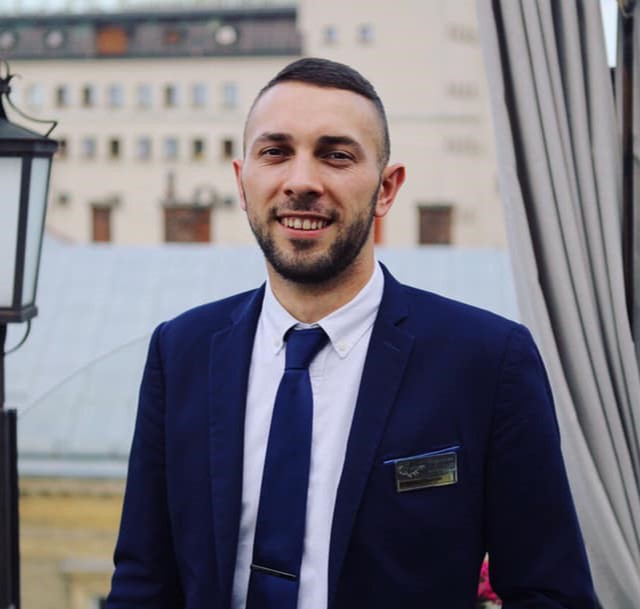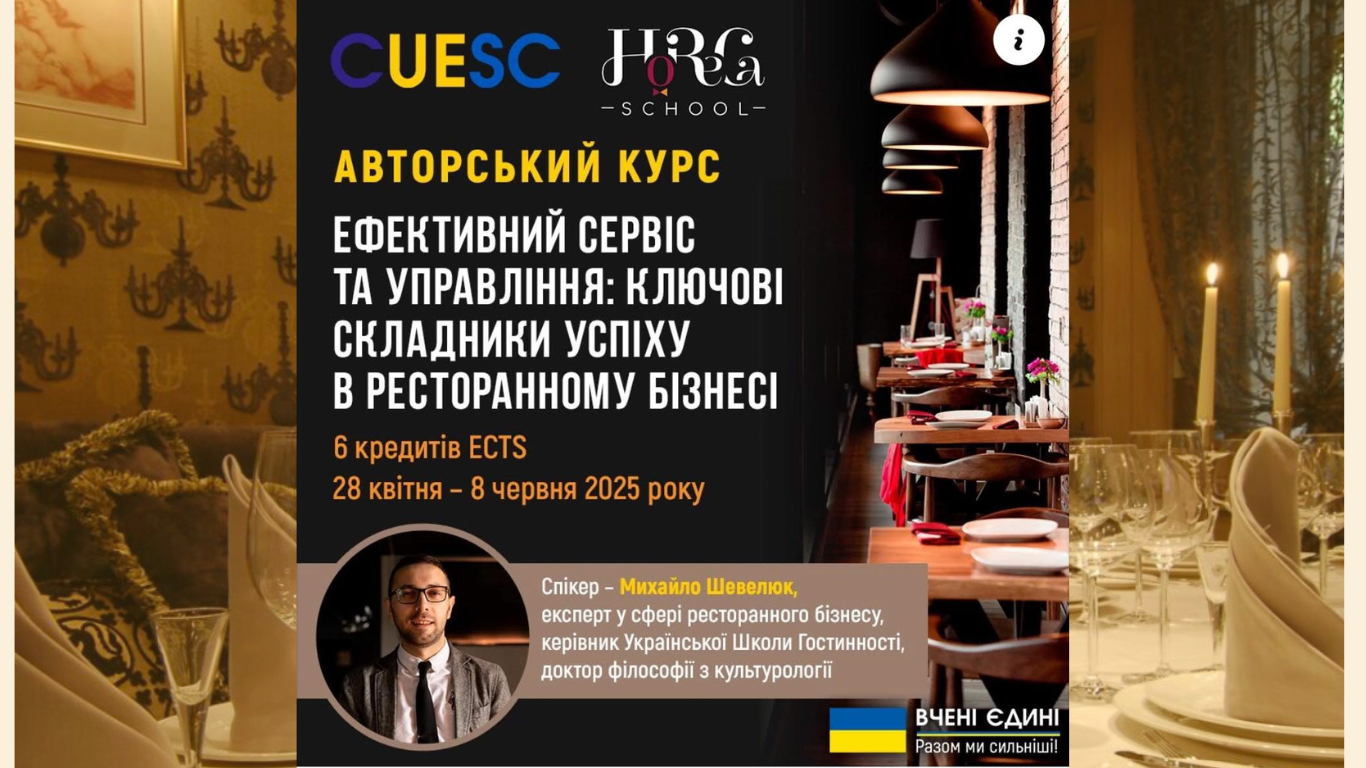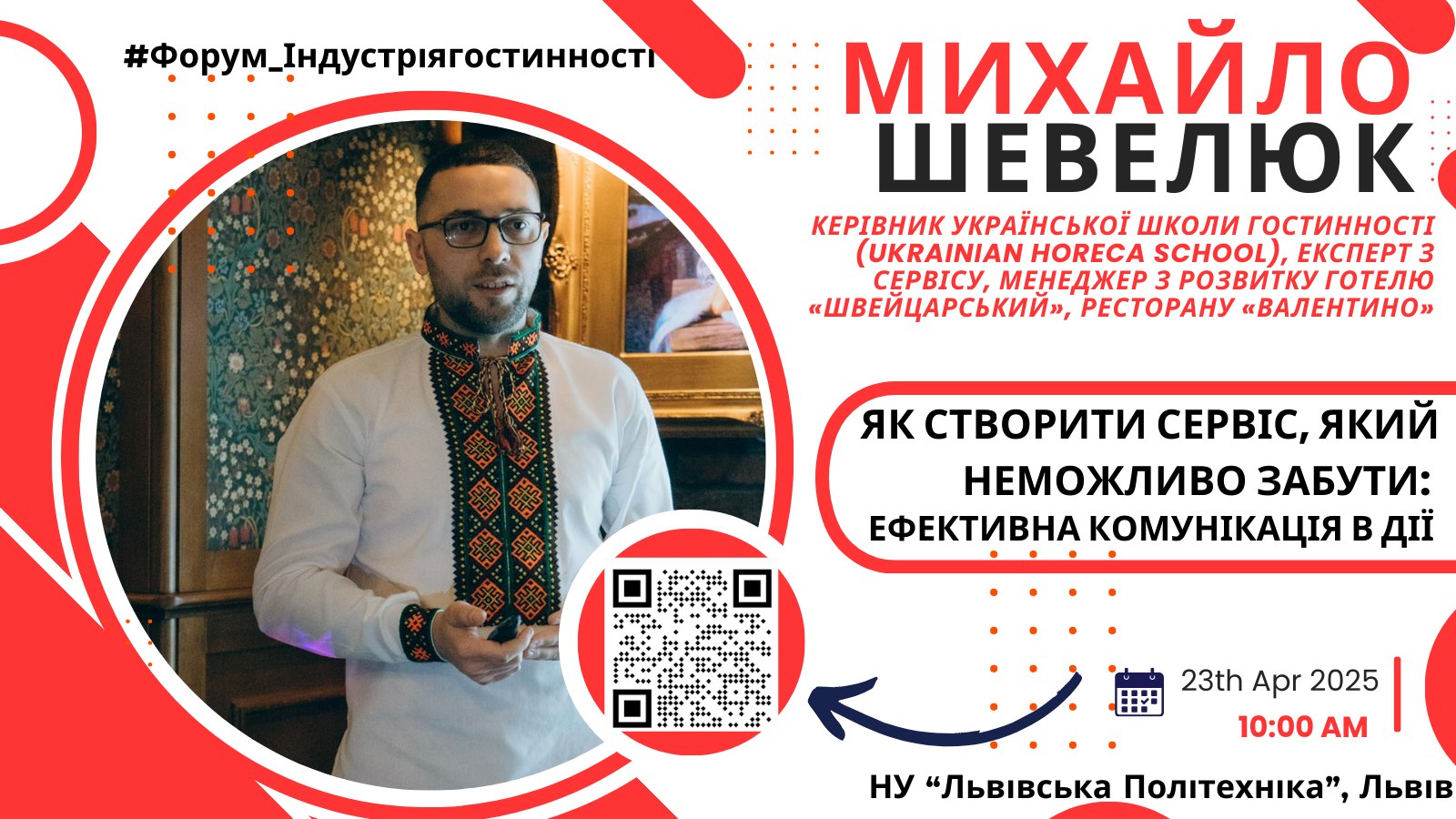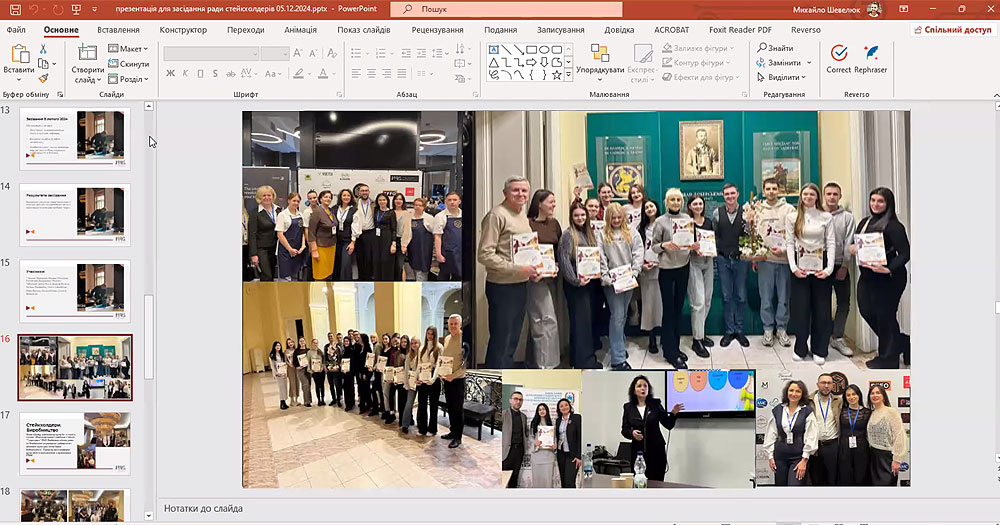



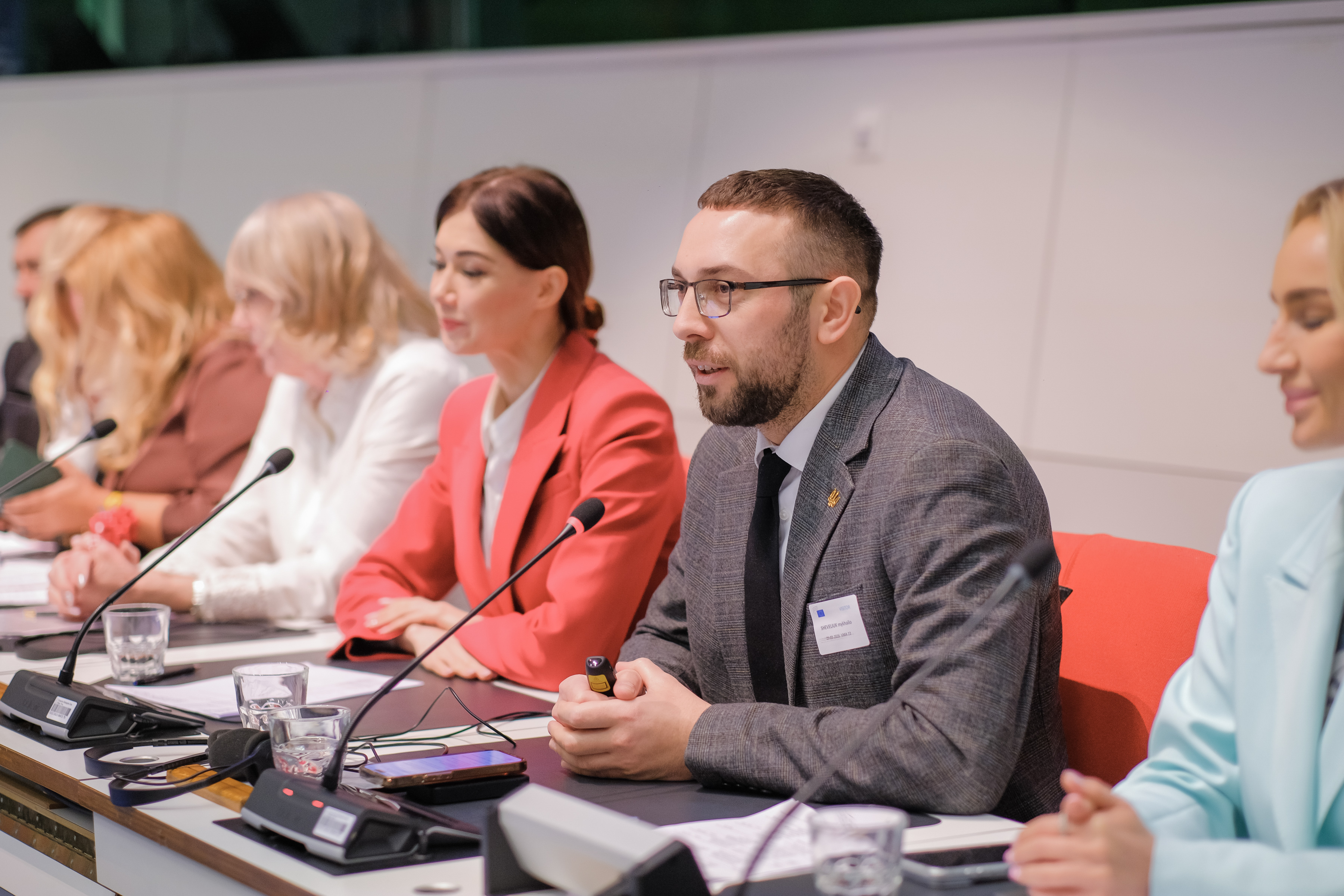
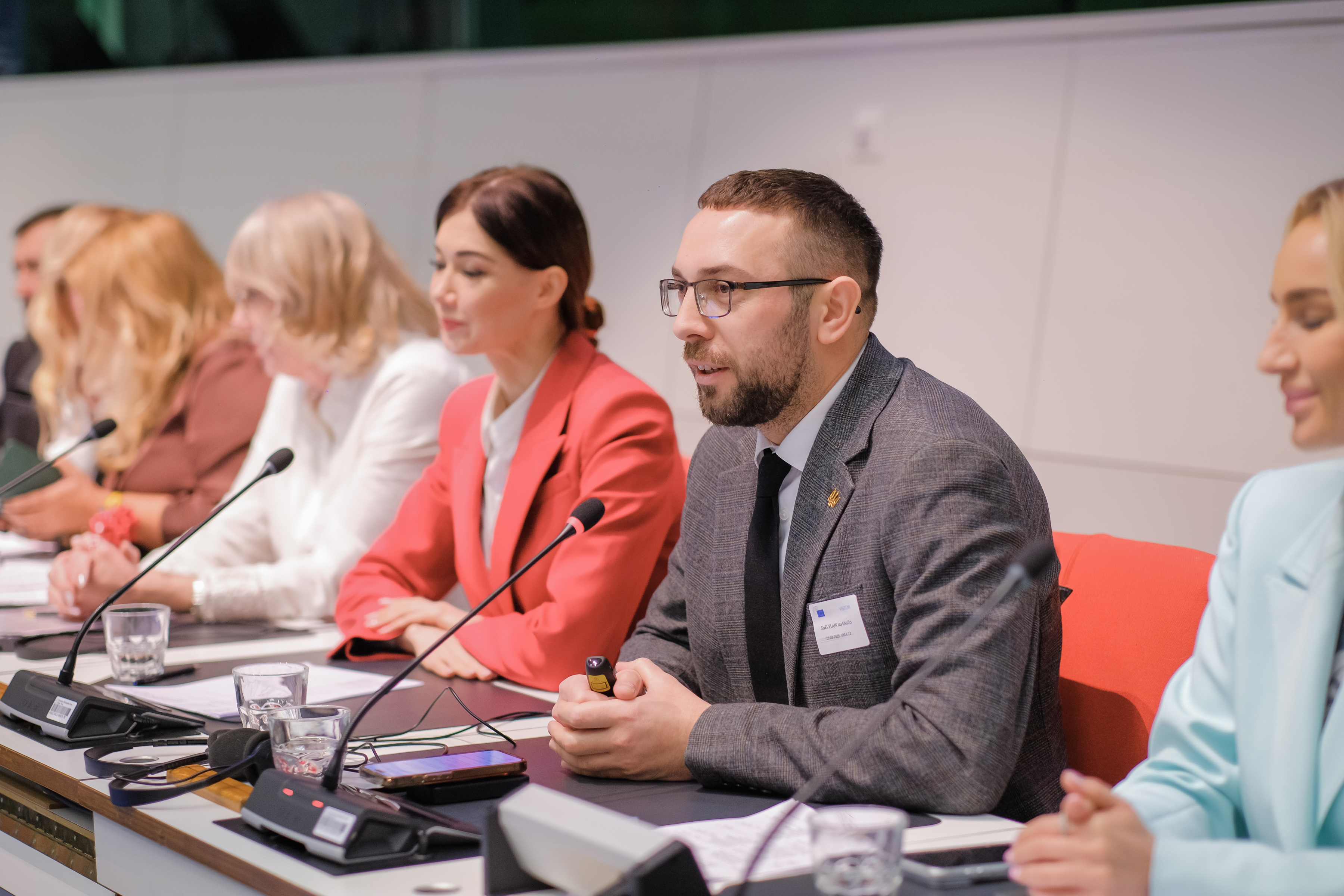
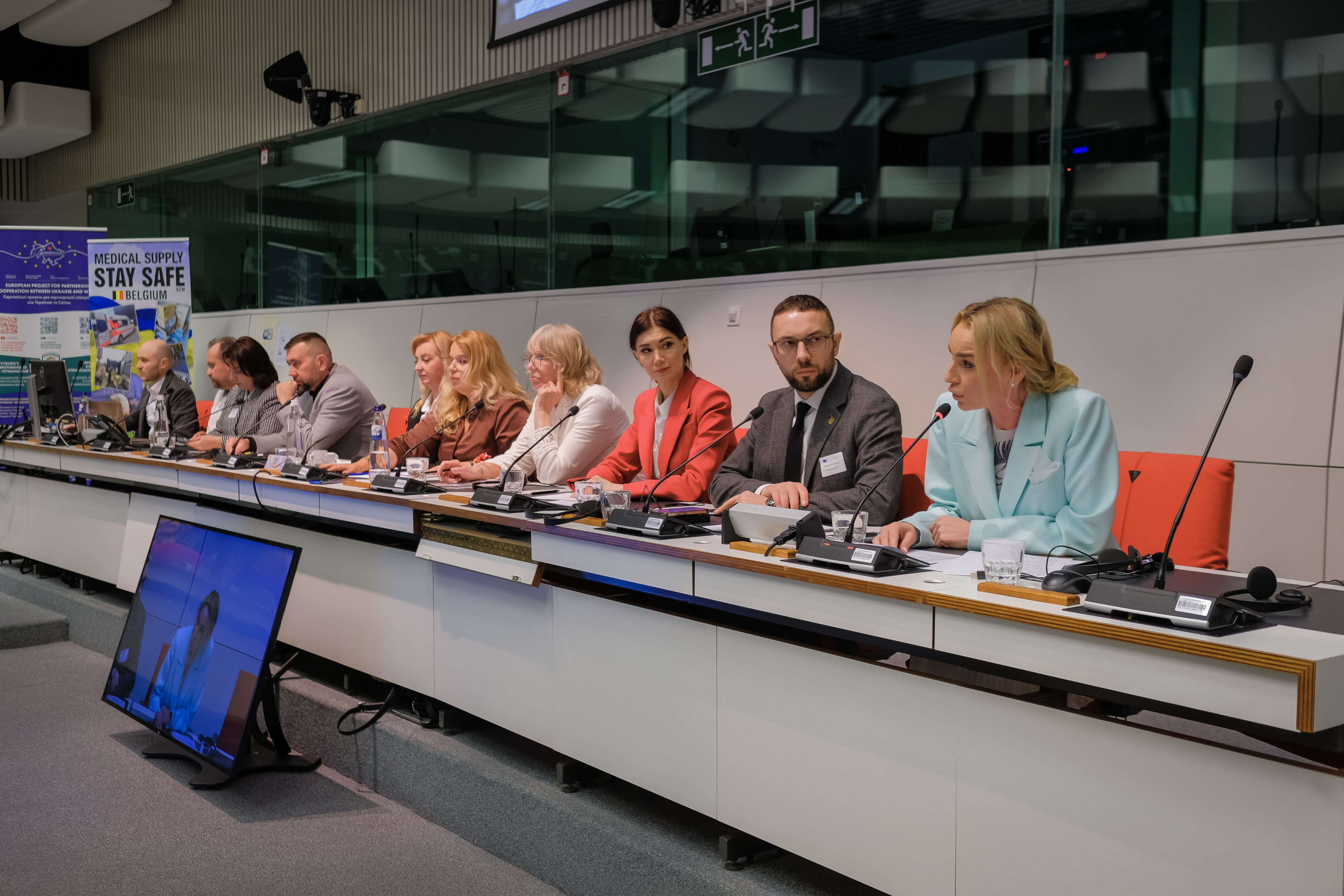
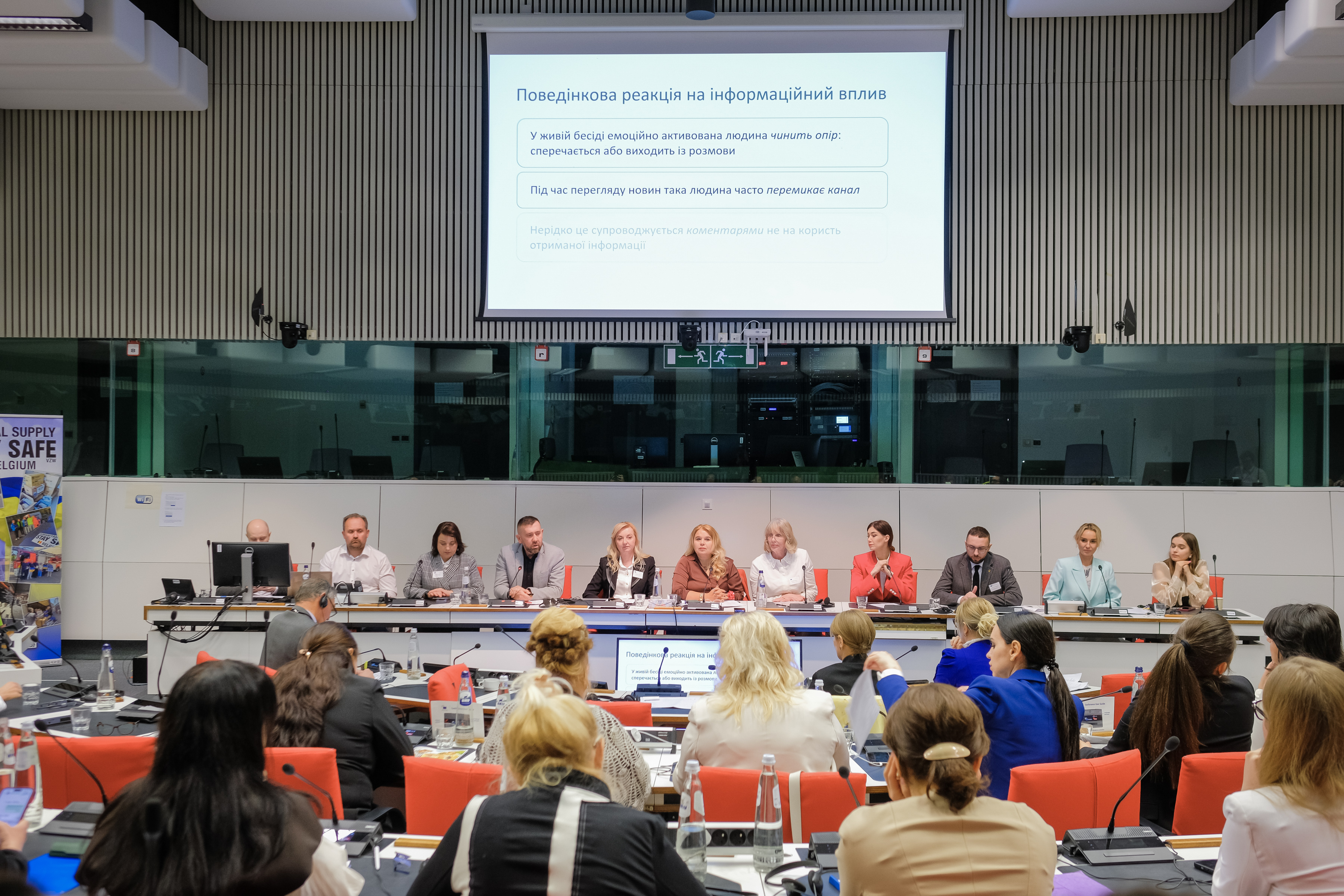
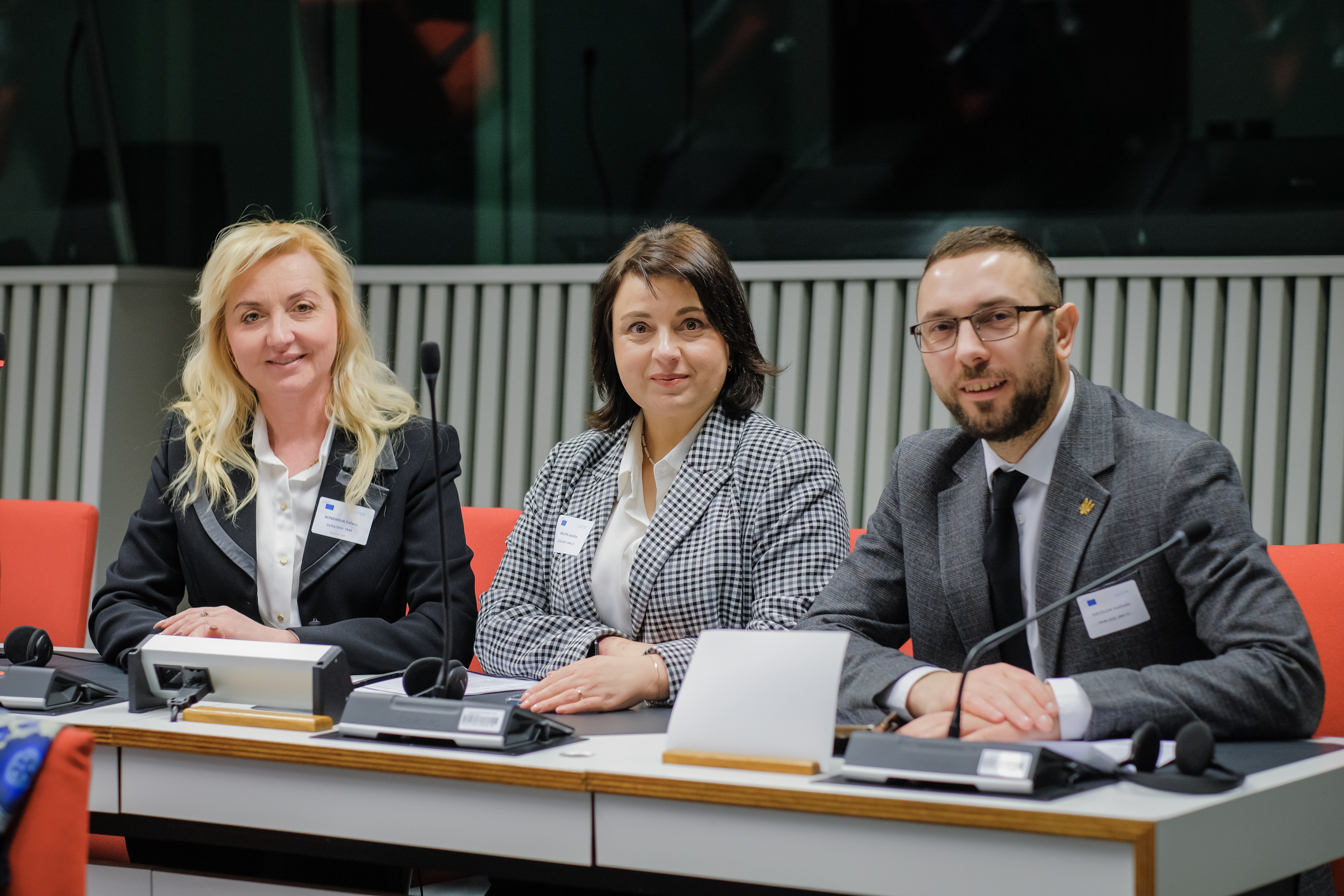
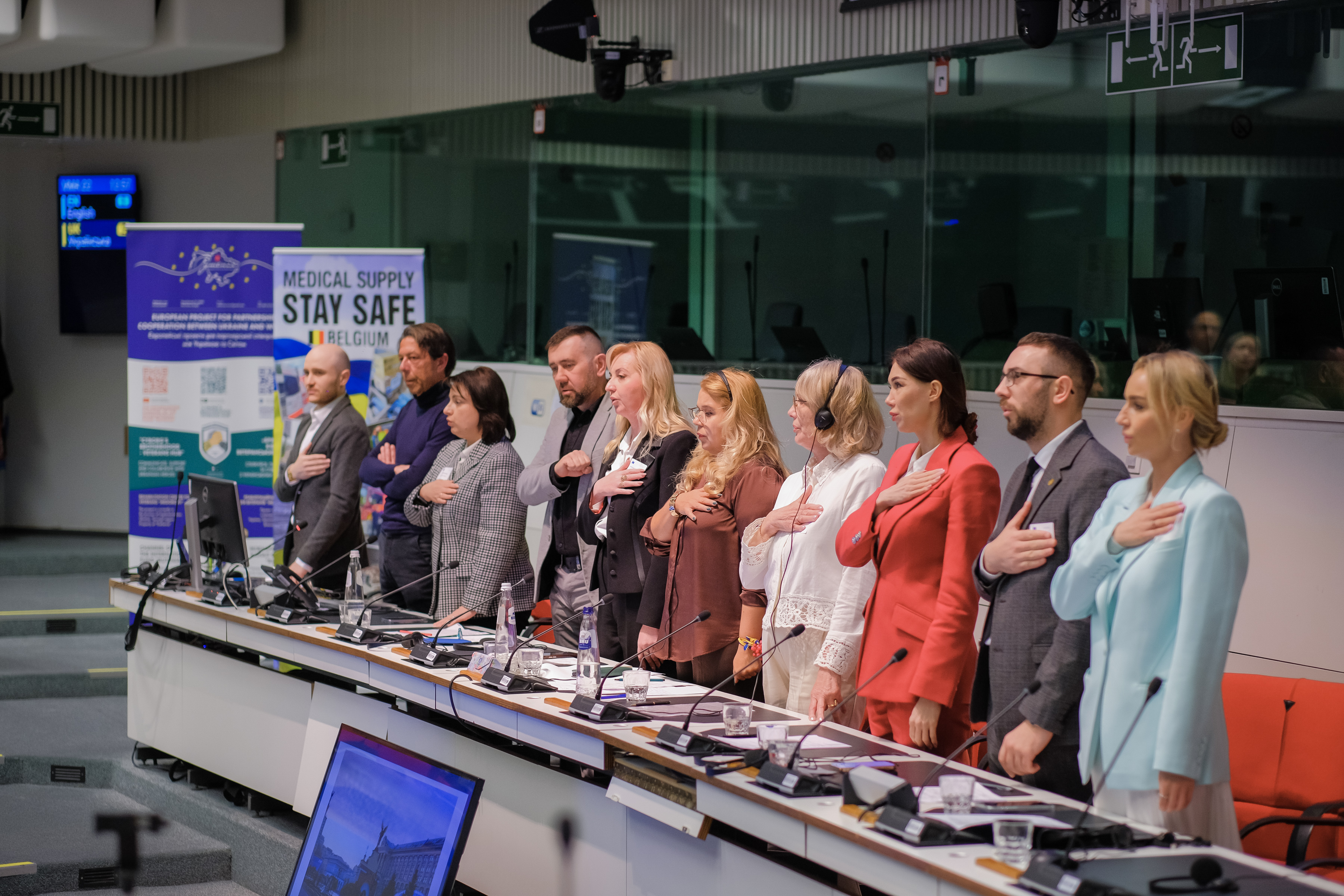
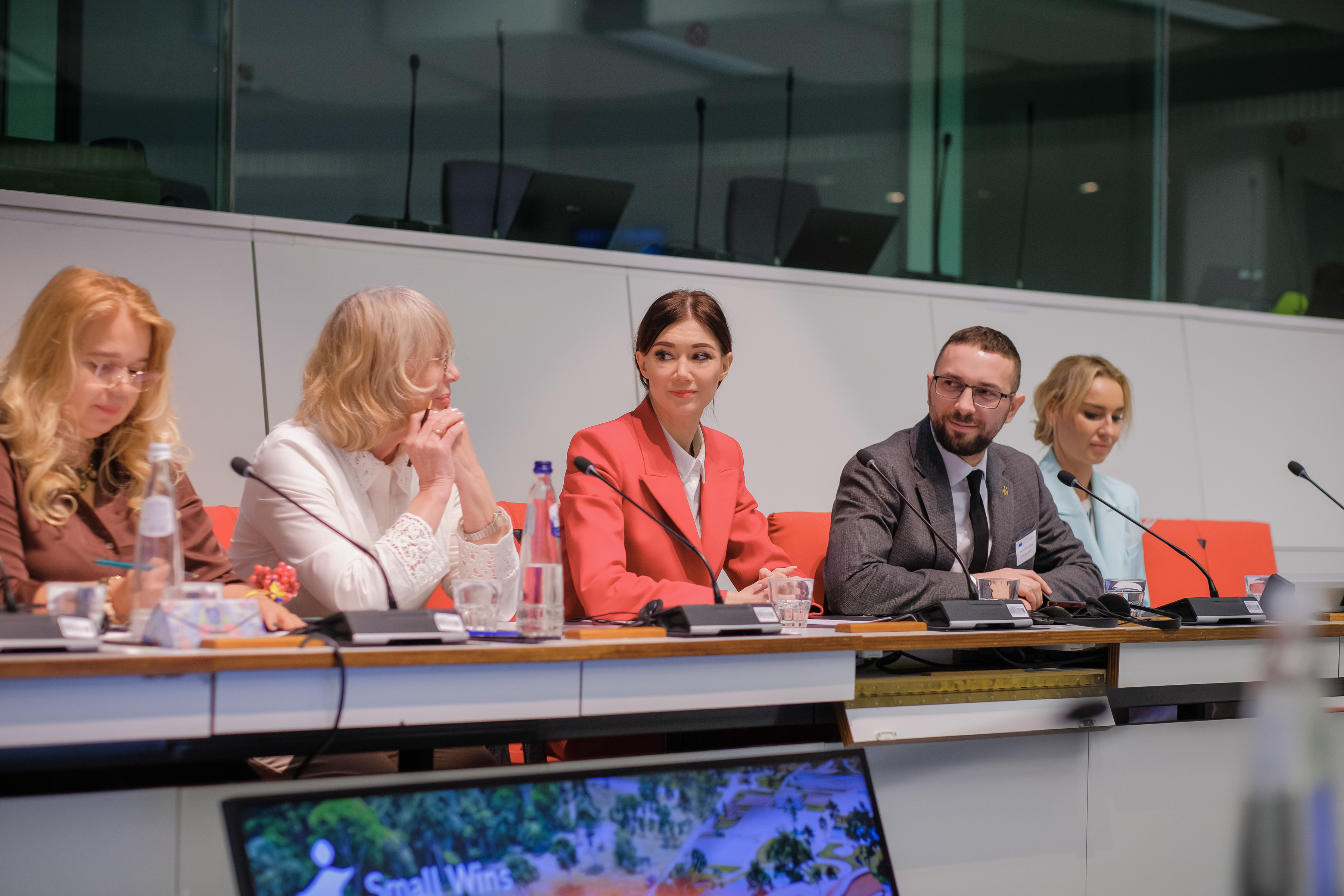
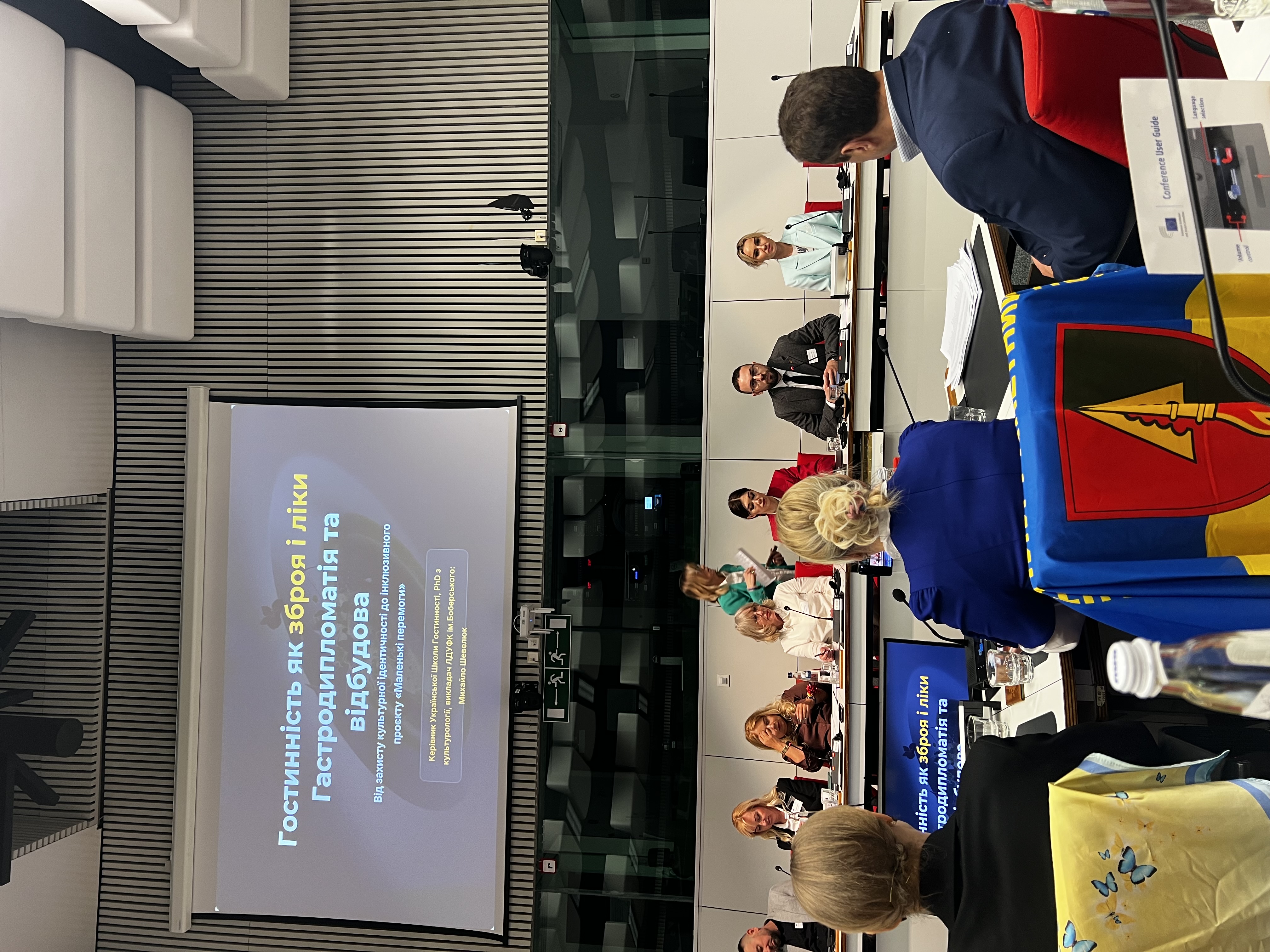
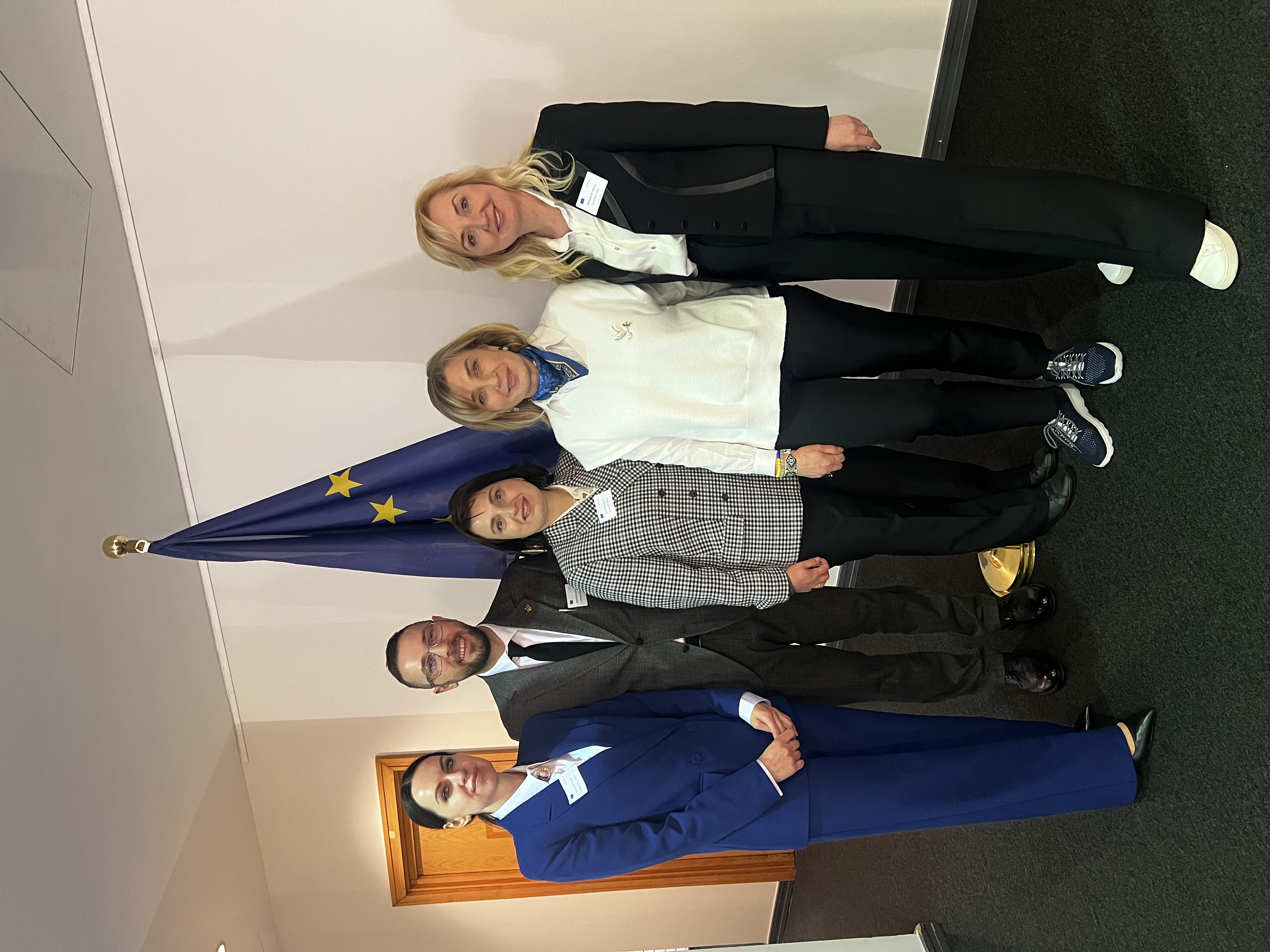
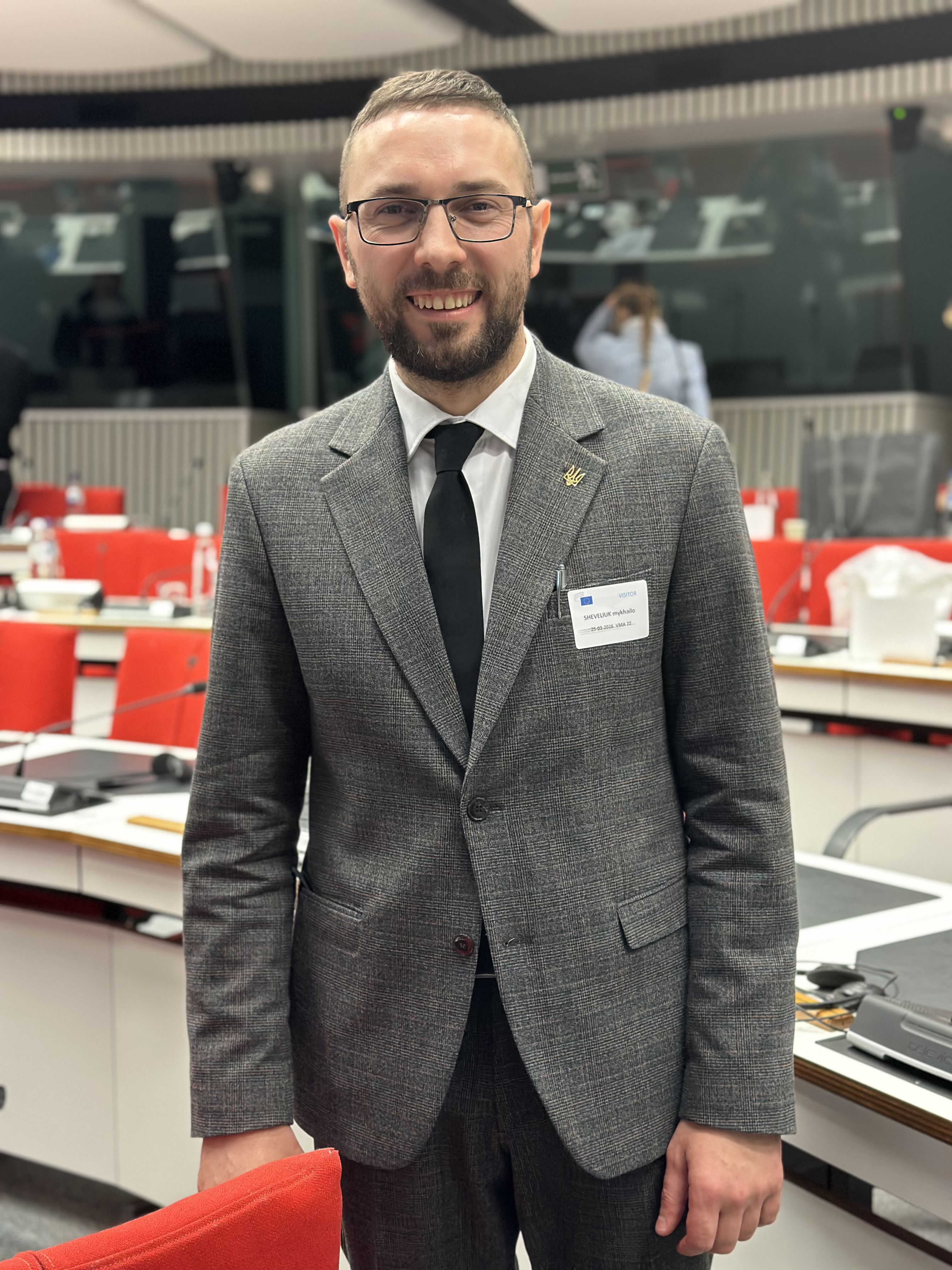
On March 25, 2026, the capital of the European Union hosted an event defining new standards for cultural and social resilience — the III Summit "European-Ukrainian Partnership in the Field of Information Security." Within the walls of the European Economic and Social Committee (EESC), Mykhailo Sheveliuk, the founder of our School, presented a strategy to the European community where the HoReCa industry becomes a key tool for protecting national identity and the actual rehabilitation of veterans and youth.
The summit brought together representatives of the European Parliament, diplomats, top security experts, and civil society leaders. However, the main thesis of the event was the idea that modern warfare is not just about fakes, but a battle for trust and meaning. In this battle, Ukrainian hospitality transforms into a strategic asset.
A Dual Mission: External and Internal Fronts
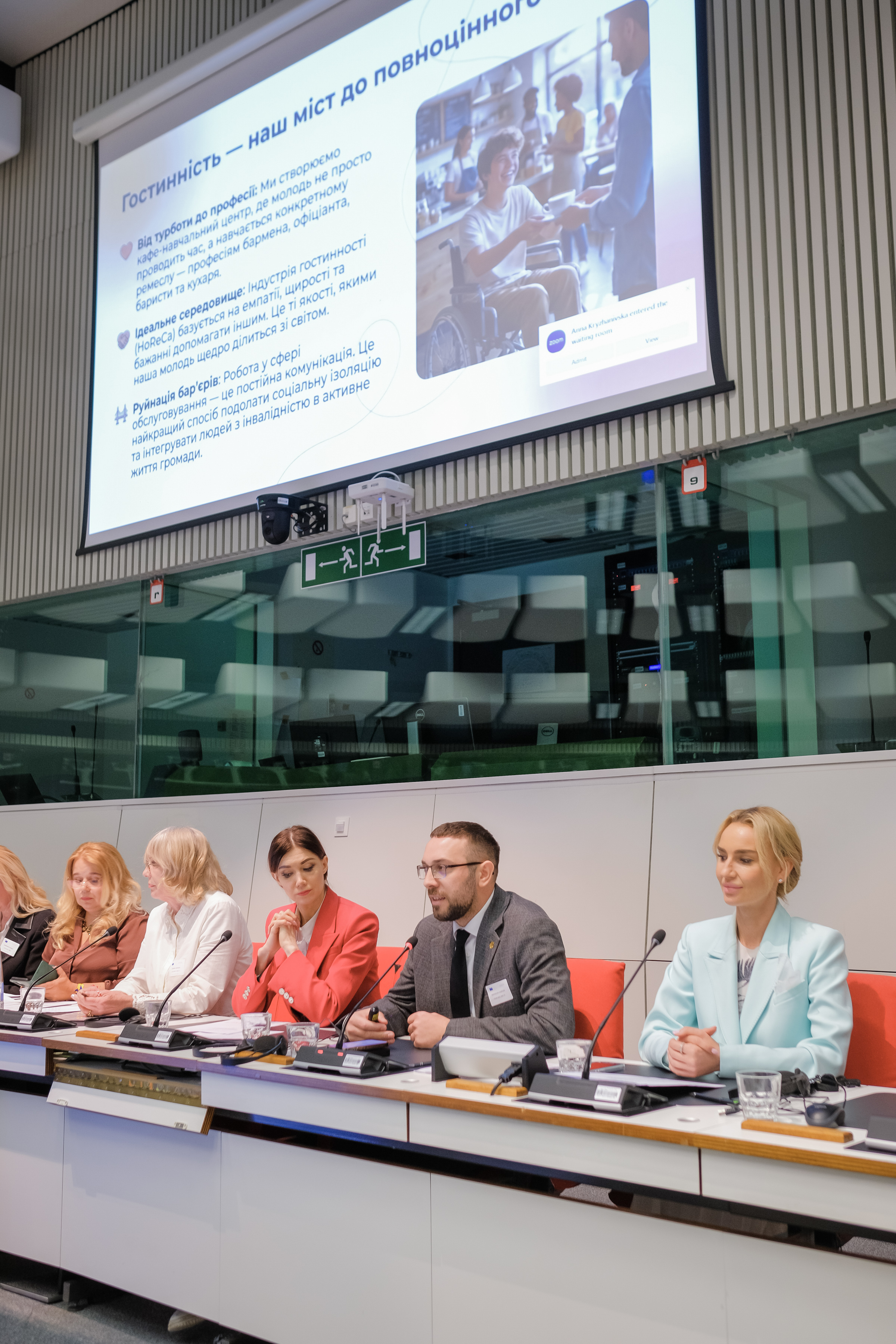
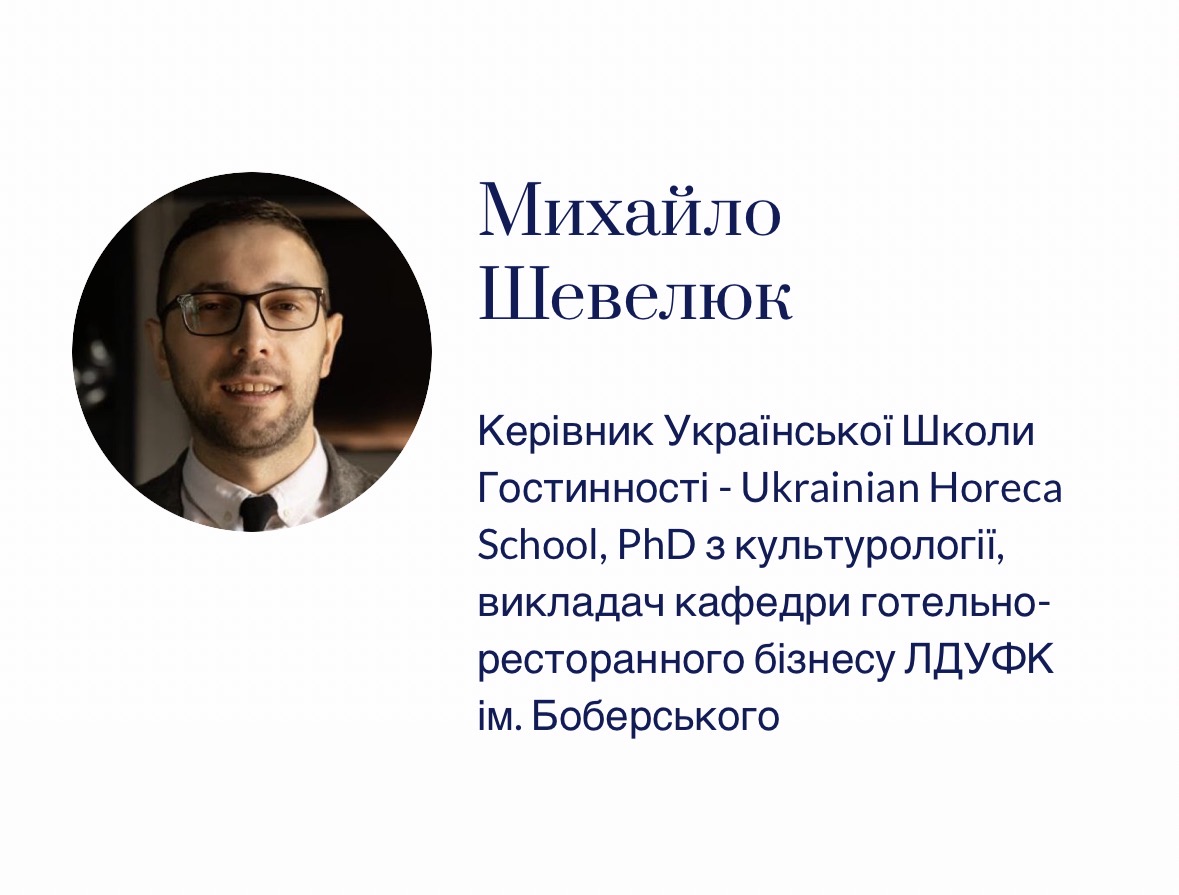
Mykhailo Sheveliuk — Head of the Ukrainian Horeca School, PhD in Cultural Studies, and lecturer at LDUFK named after Ivan Bobersky — presented a concept that divides the role of the service industry into two strategic directions:
1. External Front (Gastrodiplomacy): In conditions of hybrid aggression, the HoReCa sector becomes a hub for broadcasting truthful historical meanings. Gastronomy is the most resilient marker of national self-awareness. Protecting authentic cuisine reliably separates the Ukrainian space from the Russian imperial narrative. A vivid example of this is the "War for Borsch," which proved that culinary arts are a full-fledged field of diplomatic struggle.
2. Internal Front (Inclusion): The integration of veterans and people with disabilities into the hospitality industry is a foundation for social stability and the development of a barrier-free society. This is not charity, but the creation of high-quality personnel for the economy of the future.
Presentation of the "Small Wins" Center: More Than Care
The climax of the presentation was the introduction of the "Small Wins" (Маленькі перемоги) educational and practical center. This is a unique space for Ukraine where, after painful medical rehabilitation, a profession and dignity are born.
Today in Ukraine, the number of people with disabilities exceeds 3 million, and their employment rate is only ~17% (compared to ~50% in EU countries). "Small Wins" creates a precedent for active economic integration through three stages of growth:
• Stage 1: Healing the Soul. Working with psychologists and sensory spaces helps relieve anxiety. A child or veteran learns to trust the world again through play and a safe environment.
• Stage 2: Mastery. Real training on industrial equipment found in premium restaurants. The professions of barista, bartender, or chef do not require years of theory — the focus here is on practice, which is ideal for rapid rehabilitation and motor skill development.
• Stage 3: The First "Thank You." Working in the center's open cafe with real guests. This is the moment when yesterday's patient becomes a professional forever.
Project Architecture and Scale
The project impressed European partners with its systemic approach. The Horeca School is part of an inclusive complex covering 10,000 m², where every square meter works toward a result:
• Safety Foundation (Level -1): A reliable shelter (122.8 m²), its own artesian well, and autonomy that allows learning to continue even during shelling.
• Taste Workshop (Level 1): A training kitchen (144.4 m²) with adaptive surfaces that lower for wheelchairs, and an open cafe (182.7 m²) without thresholds.
• Education and Adaptation (Level 2): A "Barista" laboratory, an IT class for studying POS systems, and sensory zones for psychological decompression.
• Community Voice (Level 3): A giant Conference Hub (302.6 m²) with an inclusive stage and induction loops for people with hearing impairments.
Global Solidarity: Who Supported the Initiative
The speech by Mykhailo Sheveliuk resonated among a constellation of prominent international speakers. Solidarity with Ukrainian initiatives was expressed by:
• His Highness Michel de Ligne, Prince of Belgium, emphasized the importance of collective defense of democratic values.
• Dainius Žalimas, MEP, stressed that disinformation is a global industry, which we counter with real actions.
• Seamus Boland, President of the EESC, recognized Ukraine's experience as a unique source of resilience.
The roles of cultural and public diplomacy were also discussed by Liudmyla Ashrafi (Ruthenia vzw), Violetta Dvornikova (EAUW), and Lara Levchun (NCUAI). Professional analysis of hybrid threats was presented by Iryna Leroy (GRCS) and Yevhen Mahda (Institute of World Policy).
Summary and Gratitude
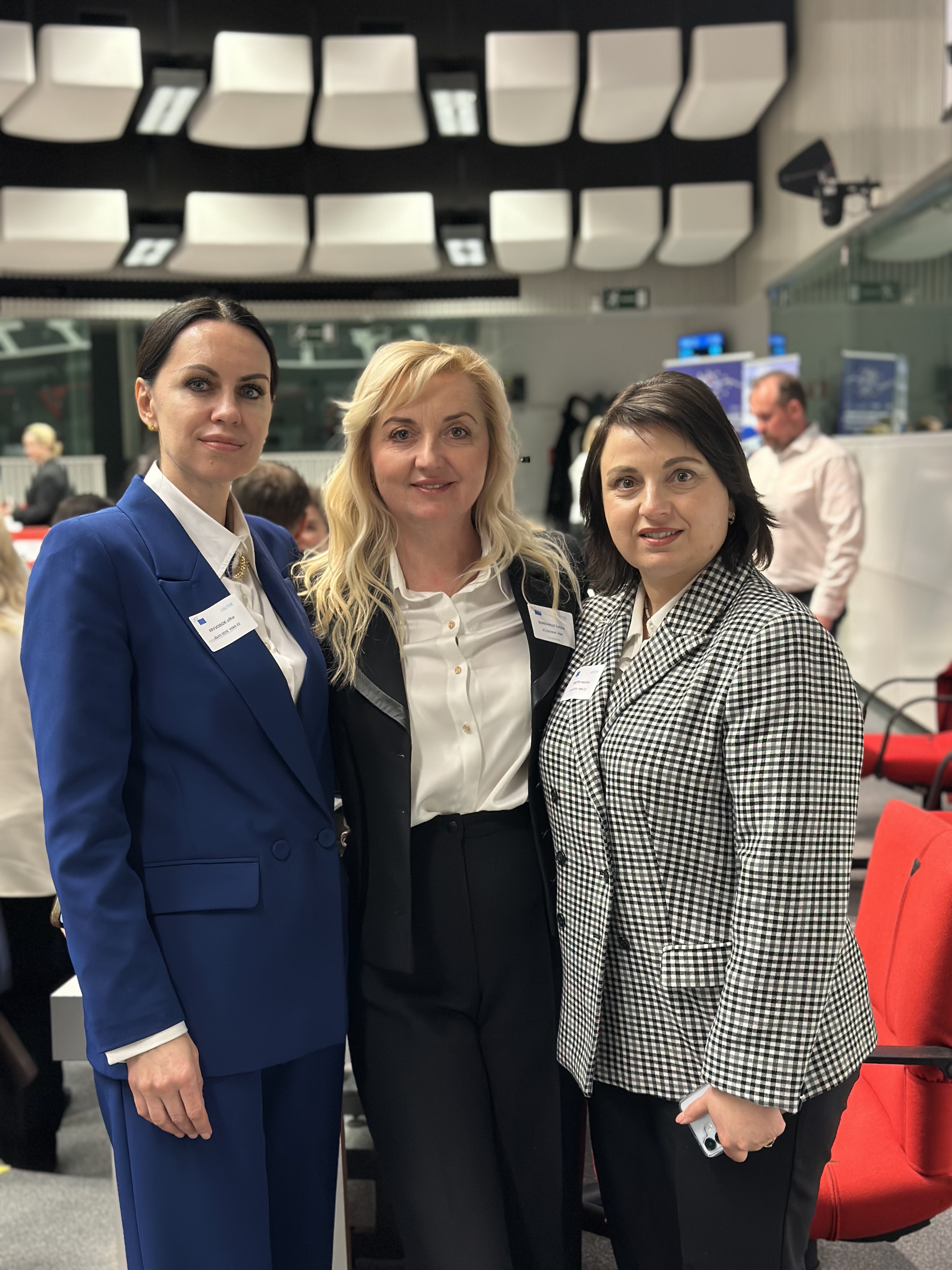
The summit in Brussels proved that the Ukrainian Horeca School is setting new global standards today. We are grateful for the invitation and partnership to the organizers — NGO "Ruthenia" (Lada Ortynska, Ivanna Tlumatska), the MFO "Support of the Volunteer Movement" in the Verkhovna Rada of Ukraine (Valeriy Zub, Liudmyla Onofriiese), and the general partner — the EESC.
Together with partners such as European Union in Ukraine, NCUAI, Emile Foundation, and many others, we are building a future where every Ukrainian, despite all the traumas of war, feels empowered and needed.
Become a co-author of a miracle — support the development of inclusive education in HoReCa!